
Social Security Law
Your future deserves planning. Your rights deserve protection.
Securing a retirement pension, having an income during periods of incapacity for work or getting a benefit recognized by the INSS, Brazil’s National Social Security Institute, takes more than meeting the requirements. It takes knowledge, planning and a careful look at each situation.
A social security decision can stay with you for the rest of your life.
An old job that does not appear in the CNIS, the INSS record of employment and contributions. A period of rural work with no paperwork. Years of exposure to noise or chemicals that no one ever recorded as hazardous work. Or simply an application filed at the wrong time. Details like these change the amount of a benefit or postpone retirement, and the effect repeats every month for years, and may even reach the survivor’s pension paid to the family.
At Dolberth Advogados, we practice Social Security Law before the INSS and in the courts, in the recognition, granting and review of benefits. Every case begins with an individual analysis of the person’s history: we gather the documents, check each period and only then recommend the most appropriate legal path. When a benefit has already been denied, stopped or calculated too low, we examine what happened and what can still be done.
Knowing your rights is the first step to protecting your future.
From planning to benefit
Retirement pensions
Applications under the types provided by law: by age, under the transition rules of the 2019 pension reform, special retirement for hazardous work, rural, hybrid (rural and urban periods combined), for persons with disabilities and for permanent incapacity for work.
Retirement planning
Review of the contribution history, simulation of scenarios and identification of unrecognized periods, to choose the most favorable rule and timing for the application.
Temporary incapacity benefit
Formerly known as auxílio-doença (sickness benefit). Applications, extensions and appeals in cases of prolonged sick leave, refusal or wrongful termination of the benefit.
BPC/LOAS
Granting and reinstatement of the Continuous Cash Benefit (Benefício de Prestação Continuada), a non-contributory welfare benefit for older persons and persons with disabilities who meet the legal requirements.
Survivor's pension
Recognition of dependent status, granting, reinstatement and review, including cases involving a stable union (common-law partnership) and disputes between dependents.
Benefit review
Analysis of errors in the granting or calculation of a benefit and of disregarded periods, assessing whether an administrative or judicial review is viable.
CNIS and contribution record
Correction of CNIS data and recognition of employment, contributions, rural periods and hazardous work that affect entitlement to benefits.
Contributions made abroad
Use of periods worked in countries that have a social security agreement with Brazil, such as Italy, Spain, Portugal and the United States.
Appeals and lawsuits against the INSS
Representation of insured persons and dependents against refusals, suspensions, cancellations or incorrect awards, before the Social Security Appeals Board (CRPS) and the courts.
How we work
We serve clients throughout Brazil. Most meetings take place by video call.
- 01First conversation
We learn about your work history, what has already been requested from the INSS and what you need to resolve. - 02Gathering documents
We collect the CNIS, employment record books (carteira de trabalho), payment slips, medical reports and other documents, and check each period. - 03Analysis
We compare the applicable rules, simulate scenarios and clearly explain the advantages and risks of each path. - 04Application or appeal
We file the application or appeal with the INSS, or bring a lawsuit when that is the right path. - 05Follow-up
We monitor requests for documents, medical examinations and deadlines until the decision, keeping you informed at every stage.
Common questions about INSS benefits
The INSS denied my application. What can I do?
You may file an appeal with the Social Security Appeals Board (CRPS) within 30 days of being notified of the decision, or take the matter to the Federal Courts. To go to court, as a rule it is enough to have applied to the INSS first; you do not have to exhaust administrative appeals. The best option depends on the reason for the refusal and the evidence available.
Is there a deadline to request a benefit review?
Yes. As a rule, the right to review the award of a benefit expires after 10 years, counted from the month following the first payment (Article 103 of Law 8,213/1991). When a review is granted, arrears can only be claimed for the last 5 years.
What is the CNIS and why should I check it?
The CNIS (National Register of Social Information) is the database the INSS uses to recognize employment, earnings and contributions. If a period is missing or recorded with the wrong amount, it may be left out of the benefit calculation. Corrections can be requested with supporting documents, ideally before applying for retirement.
Is the BPC/LOAS a retirement pension?
No. It is a welfare benefit equal to one minimum wage for people aged 65 or over and for persons with long-term disabilities, provided that the family income per person is within the legal limit. It does not require contributions to the INSS, but it does not include a 13th payment and does not give rise to a survivor’s pension.
I worked in another country. Does that time count towards retirement in Brazil?
It may, if that country has a social security agreement with Brazil, such as Italy, Spain, Portugal, Germany, Japan and the United States, among others. As a rule, the periods are added together to meet the requirements, and each country pays the share corresponding to the time contributed there. The rules vary from one agreement to another.
Do I need a lawyer to apply for an INSS benefit?
It is not mandatory. Applications can be filed directly through the Meu INSS platform. Legal advice helps to check the contribution history, choose the rule and the timing of the application and gather the right evidence, which reduces the risk of refusals due to missing documents.
Who handles your case
Social Security matters are led by partner Thalyta Dolberth, from the first review of the records to the final decision.
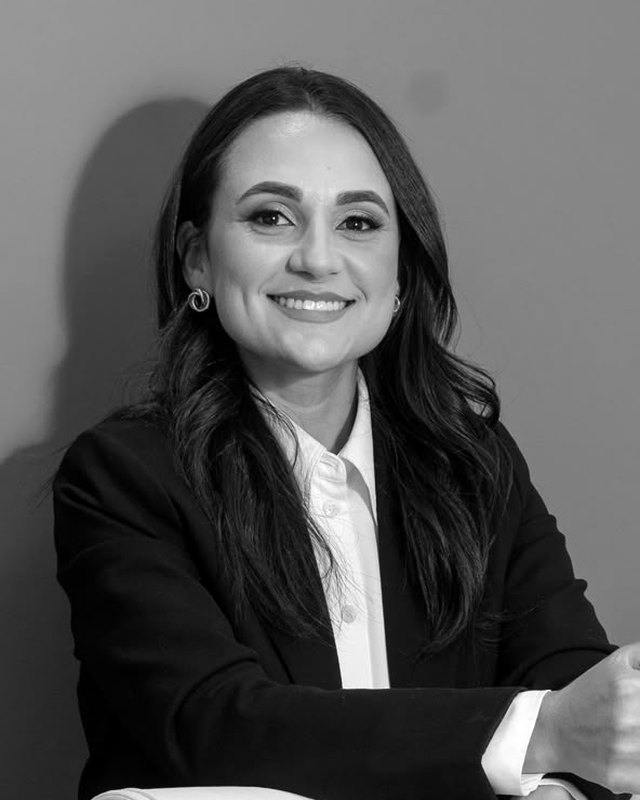
Thalyta Dolberth
Partner · OAB/PR 97.660
Specialist in Family and Succession Law.
Leads the firm’s Social Security Law cases.
EducationLaw degree · Federal University of Paraná (UFPR) · 2018
Postgraduate specialization in Family and Succession Law · Academia Brasileira de Direito Constitucional · 2020
Contact the firm
Briefly describe your situation. The firm will get back to you to schedule a meeting.
Av. Cândido de Abreu, 526, Cj. 1410-A
Centro Cívico, Curitiba/PR, Brazil · CEP 80530-905
+55 41 4042-5100 · phone and WhatsApp
contato@dolberth.com.br

Your message is sent to the firm’s email.

Av. Cândido de Abreu, 526, Cj. 1410-A
Centro Cívico, Curitiba/PR, Brazil
CEP (postal code) 80530-905
Founded in June 2016
Law firm registered with the Brazilian Bar Association (OAB/PR) under no. 5087
Practice throughout Brazil
© 2026 Dolberth Advogados · CNPJ 25.190.909/0001-80